Joining Instructions: Join the meeting on MS Teams | Meeting ID: 321 300 428 853 4 | Passcode: q75gi6cL
View Recording: With the speakers permission, we will share the presentation recording on our website at: Insights Wales / Cipolwg Cymru – 2026-27 Recordings – epwales.org.uk
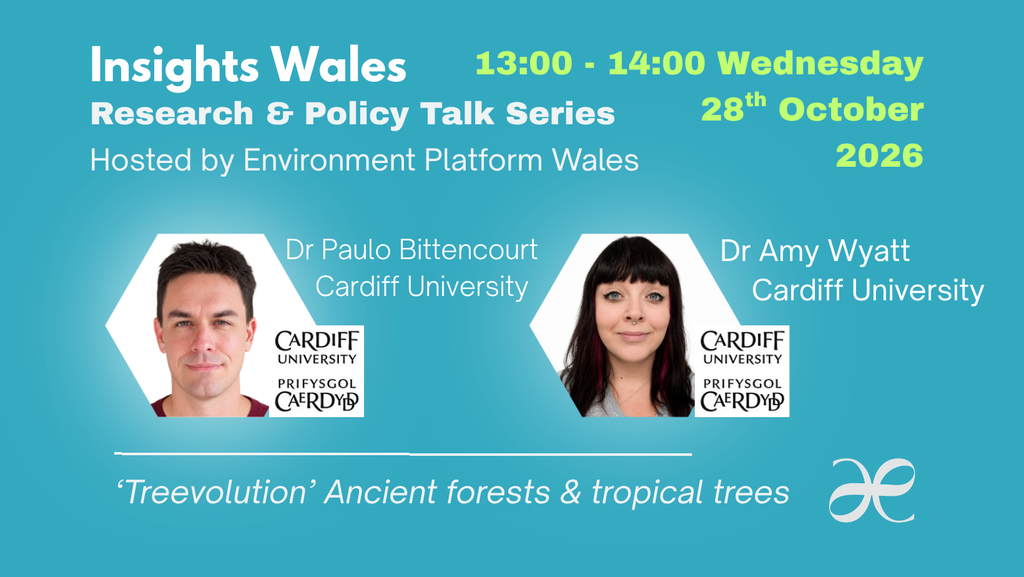
How the World’s First Forests Developed: Evidence from Devonian Svalbard | Dr Amy Wyatt
There was a time in Earth’s history when forests didn’t exist. During her PhD at Cardiff University, Amy studied Devonian plant fossils from Arctic Svalbard which around 400 million years ago, sat close to the equator and supported some of the earliest tropical forests. Using fossils collected in the field alongside material from museum collections, she studies how some of these early trees grew, the very different ways plants evolved to become tree-sized and how different kinds of trees were already growing together across ancient floodplains. Her research shows how structurally and ecologically complex early forests had become, helping us understand the wider transition towards vegetation that could increasingly influence soils, landscapes and environmental processes.
About the Speaker
Dr Amy Wyatt is a paleobotanist, educator and science communicator. Alongside her research, she works as a a science teacher and in public engagement. She runs The Curious Naturalist, bringing together botany, natural history and science together with Welsh folklore and traditional knowledge, using workshops to explore where those stories and traditions meet the natural world.

How the tallest tropical trees have evolved to pump water to top branches | Dr Paulo Bittencourt
If you placed the leaves of all plants side-by-side, they would cover the surface of the Earth. And beneath each of those leaves there would be hundreds of microscopic conduits supporting them mechanically, keeping them hydrated and supplied with nutrients. Together those conduits form the water transport system of plants and its evolution was the most important event in the past 550 million years. The plant water transport system is 60% of all living biomass and returns 70% of all rainfall back to the atmosphere. Its evolution changed every single geomorphological, biochemical and climatic process on the planet. How the water transport system of tropical plants modulate those processes, from nano-physiology to ecosystem ecology and large-scale biogeochemistry, is the focus of my research.
About the Speaker
Dr Paulo Bittencourt is a Tropical Plant Ecologist focused on understanding how plants and water drive the ecology, evolution and function of tropical environments. His work is built upon an in-depth understanding of plant ecophysiology and the development of new sensor technologies, allowing him to study how plants shape our planet.