



📅 Wednesday 22nd April 2026 | 🕐 13:00–14:00 GMT
🔗 Click here to join the meeting on MS Teams
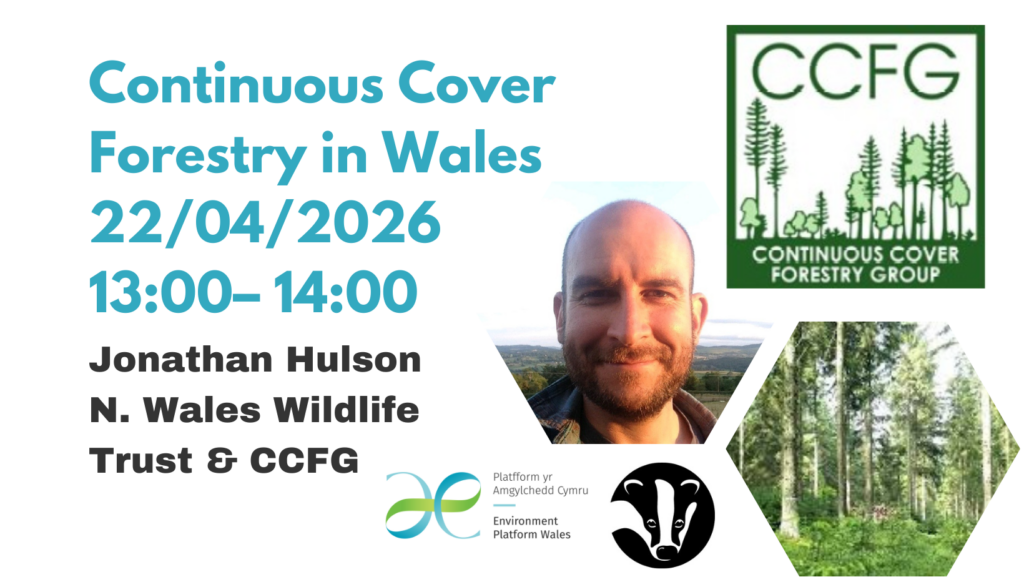
Planting new woodlands is widely recognised as an important tool to help mitigate the effects of climate change and ameliorate biodiversity loss. However, the role of woodlands in conserving nature at the same time as providing the ecosystem services needed by local communities and the Welsh economy in the long term, can only be achieved if their management follows principles of sustainable management. In Wales, this is underpinned by the Environment (Wales) Act 2016, the principles of SMNR and the ecosystem approach of the Convention on Biological Diversity. Across Europe, there is increasing awareness of how healthy, functional ecosystems are most resilient to biotic and abiotic impacts on our natural resources, such as drought, flooding, storms, and the pests and diseases that exploit these extremes. It is an exciting time to be a forester, these land management professionals will need to be the ecologists of the future, demonstrating how Wales’ future supply of quality timber will only come from forests that are managed in an integrated way that maintains and restores woodland habitats and their ability to adapt to the effects of climate change. Jonathan will introduce examples of how forests around Europe are following the principles of Continuous Cover Forestry and the environmental and socio-economic outcomes that result.
About the Speaker

Jonathan Hulson is a land management and conservation professional with North Wales Wildlife Trust, where he leads landscape-scale initiatives such as the Woodlands for Water project to restore and enhance woodlands, improve water quality and strengthen habitat resilience across north-east Wales. He brings experience in sustainable land management, community engagement and partnership working with stakeholders including farmers, authorities and conservation bodies to deliver nature-positive outcomes on the ground. Jonathan is the Chair of the Continuous Cover Forestry Group which aims to promote the transformation of even-aged plantations to structurally, visually and biologically diverse woodlands.